Virtual Chamber Series
→
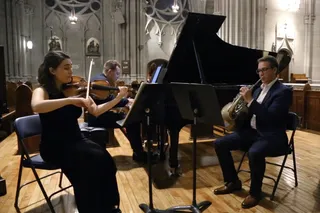
Join us Sunday, February 14 at 4 PM for our first virtual concert with Symphony in C's Gergana Haralampieva and Eric Huckins, with guest artist Maxwell Foster.
Johannes Brahms: Horn Trio in Eb Major, Op. 40
Gergana Haralampieva, violin
Eric Huckins, horn
Maxwell Foster, piano
Click here to learn more about the Artist.
Pre Concert Conversation
| Join Gergana, Eric, and Max for a pre-concert ZOOM conversation Sunday, February 14th at 3:30 p.m. REGISTER HERE FOR PRE-CONCERT CONVERSATION |
Watch Concert Here
| Click here to watch the concert on Sunday, February 14th starting at 4:00 p.m. Please note: the concert video will remain available for viewing for 1 week after the performance on our You Tube Channel |
About the Concert
This concert opens our 2021 Virtual Chamber Concert Series and is available on a “pay what you wish” basis. These livestreamed concerts are possible only because of the generous support of friends like you. Thank you for contributing as generously as you can when watching these events.
Recorded live at the Church of the Blessed Sacrament, New York, NY
Program length: 30 minutes
Markus Lang, audio engineer
Liana Kleinman, video engineer
Brahms’ Horn Trio in Eb Major, Op. 40 was composed in 1865 for natural (valveless) horn with violin and piano, with the option of the horn part being performed by a cello. The trio was revised in 1891 with alternative versions of the horn part for either cello or viola. The trio brought together three instruments that Brahms himself played. Composed as a memorial to his mother, who had passed away earlier that year, Brahms included some material from an unpublished piano piece he had composed in 1853. The work is divided into four movements:
I. Andante - Poco più animato
II. Scherzo - Allegro - Molto meno allegro - Allegro
III. Adagio mesto
IV. Finale. Allegro con brio
The overall mood is one of mourning. The first movement harkens back to the Baroque style sonata da chiesa (church sonata) with an extended slow movement. The Scherzo seems to represent reminiscences of happy times but the third movement, Adagio Mesto, is solemn and profoundly sad. In the final movement, Brahms seems to turn to nature and the outdoors for spiritual healing and embracing life again.
Visit Earsense.org for more information.