Symphonic Series: Schumann & Beethoven
Symphony in C invites you to a concert of Schumann & Beethoven on May 21, 2022 at the Rutgers-Camden Center for the Arts in Camden, NJ.
Kazem Abdullah, conductor
Anna Stoytcheva, piano
Schumann: Piano Concerto in A minor, Opus 54
Beethoven: Symphony No. 6 in F major, Op. 68 (Pastoral)
COVID-19 Updates:
Masks and proof of COVID-19 vaccination are required. Please have proof of vaccination ready to show. The concert will be approximately one hour and thirty minutes with no intermission.
Program
Dmitri Shostakovich, Suite for Variety Orchestra
(1906-1975)
Waltz II (1938)
Robert Schumann Piano Concerto in A minor, Op. 54
(1810-1856) (1845)
I. Allegro affettuoso
II. Intermezzo-Andantino grazioso
III. Allegro, vivace
Ludwig van Beethoven Symphony No. 6 in F major, Op. 68 Pastoral
(1770-1827) (1808)
I. Awakening of Cheerful Feelings upon Arriving in the Country (Allegro ma non troppo)
II. Scene by the Brook (Andante molto moto)
III. Merry Gathering of Peasants (Allegro-Presto)
IV. Tempest, Storm (Allegro)
V. Shepherd’s Hymn – Happy and Thankful Feelings after the Storm (Allegretto)
Steinway piano selected from Jacobs Music
Symphony in C appreciates the generous support of this evening’s sponsors.
Kazem Abdullah, Conductor
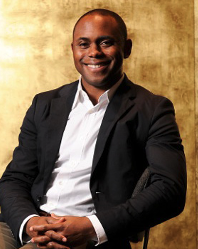
American conductor Kazem Abdullah currently lives in Nürnberg, Germany. He was Music and Artistic Director of the City of Aachen, Germany from 2012 to 2017. During his tenure, he succeeded in reaching newer and diverse audiences through innovative programming and moving out of the concert hall, and into atypical venues. In addition to exploring new venues to bring concerts to audiences and experimenting with juxtapositions of styles in non-traditional concert formats, he also performed over 25 operas and collaborated with musicians such as Johannes Moser, Lise de la Salle, Angela Gheorghiu, Augustin Haedelich, and Midori.
A passionate advocate of new music as well as established repertoire, Mr. Abdullah continues to develop relationships with national and international orchestras and opera houses. Among his recent orchestral credits are the symphony orchestras of Oregon, Indianapolis, Detroit, Pittsburgh, and Cincinnati. In addition to his symphony engagements, he recently conducted an opera Gala for the Concertgebouw in Amsterdam, the American premiere of Charles Wuorinen’s opera Brokeback Mountain with the New York City Opera, and Donizetti’s Maria Stuarda for Cape Town Opera
Of special note are three acclaimed orchestral engagements: leading the Orquestra de São Paulo, one of Brazil’s most celebrated classical music ensembles, on its third United States coast-to-coast tour, conducting the New World Symphony’s 2009 Ives In-Context Festival by special invitation from Michael Tilson Thomas, and substituting on very short notice to conduct the Tanglewood Music Center Orchestra in performances of Purcell’s Dido and Aeneas in collaboration with the Mark Morris Dance Group. In the opera arena, Mr. Abdullah has guest conducted such esteemed companies as the Atlanta Opera, where he conducted Così fan tutte, and the Théâtre du Châtelet de Paris, where he led sold-out performances of Scott Joplin’s Treemonisha. Mr. Abdullah made his Metropolitan Opera debut in 2009 conducting Gluck’s Orfeo ed Euridice.
Trained as a clarinetist, Kazem Abdullah has performed extensively as an orchestral musician, chamber musician, and soloist. He spent two seasons as a member of the New World Symphony and has performed as a soloist with many orchestras including the Cincinnati and National Symphony Orchestras. He has also performed with prominent chamber ensembles such as the Paris based Trio Wanderer and the Auryn Quartet.
Kenneth Bean
Assistant/Youth Orchestra Conductor
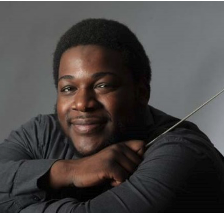
Kenneth Bean was appointed the Assistant Conductor of Symphony in C in 2018. In addition to serving as the Assistant Conductor, Kenneth also serves as Co-Director of Symphony in C’s Summer Music Camp and the Music Director of Symphony in C’s Youth Orchestra. Kenneth was recently appointed as the Assistant Conductor of the Princeton Symphony and Music Director/Conductor of the Youth Orchestra of Central Jersey.
Kenneth Bean is an instructor and conductor in the Philadelphia area, as well as an active freelance trumpeter. He earned a Bachelor of Music from the Oberlin Conservatory of Music and a Master of Music Education from Jackson State University. He has taught at many festivals and schools, including The School District of Philadelphia, St. Francis de Sales School, The Premier Orchestral Institute of the Mississippi Symphony, Luzerne Music Center and Kinhaven Music School where he currently teaches trumpet and serves as Conductor of Chorus and Orchestra for Junior Session
In Kenneth’s conducting experience, he was the Associate Conductor of Philadelphia Youth Orchestra and served as substitute conductor for Mississippi Youth Symphony Orchestra, Assistant Conductor for the Northern Ohio Youth Orchestra and the Junior String Philharmonic of the Lehigh Valley. Currently, he serves as Music Director/Conductor of the Young People’s Philharmonic of the Lehigh Valley and Conductor of the Philadelphia Young Musicians Orchestra.
As a trumpeter, Kenny is currently a member of the Philadelphia Chamber Brass and Philos Brass Ensemble. He has appeared with numerous ensembles, including Mannheim Steamroller, Mississippi Symphony Orchestra, the Sphinx Symphony Orchestra, Black Pearl Chamber Orchestra and as a soloist with Asociación Filarmónica Coral de Honduras. He can be heard on recordings with Symphony in C, the Monocacy Chamber Orchestra and hip-hop artist Thee Phantom & the Illharmonic Orchestra.
Anna Stoytcheva, Piano

Winner of "Ettore Pozzoli" International Piano Competition in Italy, pianist Anna Stoytcheva is described this way: “Stoytcheva’s tonal palette was a whirl of fabulous colors. Her agility was stunning at lighting speed” (Coral Gables Gazette). Currently Ms. Stoytcheva is the Co-Chair of Executive Board of “Bulgarian Concert Evenings in New York” series, held at the Bulgarian Consulate and at Weill Recital Hall at Carnegie Hall. She is also the pianist of American Chamber Players five-member ensemble, which performs extensively throughout the United States.
In New York City Ms. Stoytheva has performed at Avery Fisher Hall, Weill Recital Hall, Zankel Hall and Stern Auditorium at Carnegie Hall, Alice Tully Hall and Merkin Hall. Ms. Stoytcheva has been a soloist with Orchestra del' Angelicum, The Juilliard Orchestra, The New World Symphony and Sofia Radio Orchestra among others. Some conductors she has worked with are Otto-Werner Mueller, Michael Tilson Thomas, Rossen Milanov and Alasdaire Neale. The Bulgarian National Television has made several documentaries about Ms. Stoytcheva and she has recorded two solo albums, available on Gega New label.
Ms. Stoytcheva has attended Marlboro Music Festival, SummerFest at Lake Tahoe, Music Academy of the West, The Banff Center of the Arts, Pianofest, Kneisel Hall. She has collaborated with such distinguished artists as pianist Charles Wadsworth, violinist Chee-Yun, clarinetist Anthony McGill, as well as members of the Metropolitan Opera Orchestra, New York Philharmonic and several Young Concert Artists winners, including violinist Bella Hrsitova, violist Naoko Shimizu and soprano Kyoko Saito. Ms. Stoytcheva holds Bachelor and Master of Music Degrees in Piano Performance from The Juilliard School. Her teachers have been Seymour Lipkin, Veda Kaplinsky, Jerome Lowenthal, Julia Ganeva and Lidia Kuteva.
The Musicians
Violin I
Matthew Hakkarainen
Concertmaster
Danny Jin
Concertmaster
Associate
Erica Tursi
Assistant Concertmaster
Xuan Yao
Elaine He
Isabella Egawa
Emma Richmond
Raina Arnett
Olivia Moaddel
Yeseul Ann
Claire Li+
Joyce Li+
Sehaj Varma+
Violin II
Anna Tsukervanik
Principal
Maya Lorenzen
Laura Earley
Vincent Cart-Sanders
Yuan Tian
Zi Wang
Eunmin Woo
Johnny Weizenecker
Wan-Chun Hu
Zenobia Glenn+
Chloe Kilkelly+
Mary Miao+
Viola
Caeli Smith
Principal
Lauren Siess
Yizilin Liang
Chih-Ta Chen
Clara Bouch
Shannon Merlino
Angelika Tang
James Andrews+
Faith Kim+
Violoncello
Alexander Cox
Principal
Robin Park
Jiayin He
Eric Coyne
Erin Busch
Darwin Ding+
Katherine Gao+
Winston Hewitt+
Alice Kilkelly+
Kealia Smith+
Bass
Vincent Luciano
Principal
Katie Stewart
Olivia Steinmetz
Andrew O’Connor
Flute
Megan Carroll
Principal
Calvin Mayman
Ashley Cho
Piccolo
Oboe
Rita Mitsel
Principal
Jamison Hillian
Carlos Sicard-Archambeault+
Clarinet
Sara Han
Principal
Jennifer Hughson
Claudia Fisicaro+
Bassoon
Hanul Park
Principal
Jonathan Livolsi
Horn
Jack Bryant
Principal
Joseph Herring
Calvin Bouch+
Summer Starnes+
Trumpet
Anthony Barrington
Principal
Chris Delgado
Aidan Chon+
Noah Glenn+
Trombone
Addison Maye-Saxon
Principal
Jason Stein
Tuba
Liam Bagnell+
Timpani
Zach Crystal
Principal
Librarian
Jason Stein
Stage Manager
Bob Wolfe
Youth Orchestra Members +
Program Notes
Ludwig van Beethoven
Born on 16 December, 1770
Died on 26 March 1827
Symphony No. 6 in F major, Op. 68
An idealized view of country life dates back to the Ancient Greeks and Romans. Over 2000 years ago, Hesiod, Theocritus, and Virgil wrote of an edenic lost Golden Age when humans lived in harmony with Nature. This idea inspired these poets to create a literary genre that became known as The Pastoral, which concerned itself with humble subjects like shepherds and farmers living an innocent, but enviably authentic existence. During the Renaissance such Classic themes were rediscovered and began to inform artistic movements that were shifting away from the religious subjects that had dominated European art throughout the Middle Ages. Nature itself was increasingly viewed as inherently spiritual, in that it represented an aspect of creation uncorrupted by humankind. Such views have persisted to modern times and can be seen in periodic back-to-nature movements, such as 1960s communes or even urban farming. In Europe during the 17th and 18th centuries, pastoral themes were used in distinct sub-genres of opera and instrumental music. A long and widely-established pastoral tradition arose connected to the Christmas holidays because of the biblical shepherds who witnessed the birth of Baby Jesus.
By the late 1700s, when the Enlightenment promoted scientific enquiry, the natural world became a topic of study and its beauty celebrated. While this can be seen easily in the works of landscape artists, such as Cozens or Gainsborough, it could also be heard in music. There are musical traditions in many cultures around the world that seek to evoke a scene, idea, or story through the sounds of instruments alone. The term "program music" is used to differentiate such pieces from musical genres like opera, ballet, songs, and oratorios, all of which can use combinations of singing, movements, or narration to tell a story. One famous example of purely instrumental music that depicts natural scenes is Antonio Vivaldi’s violin concerto set, The Four Seasons. A popular symphonic genre developed out of the Christmas pastorals in which instruments represented, and even mimicked, country sounds such as bird calls, alphorns, the flutes of shepherds, and the drone of folk songs played on bagpipes. Melodies from peasant dances would also be used. Audiences of the time delighted in recognizing these musical references.
For Ludwig van Beethoven, the subjects of Nature and the rural districts were not mere abstractions or artistic conventions. The natural world of the countryside possessed deep healing powers that aided the composer in coping with the devastating reality of his increasing deafness. As a musician, he found the ailment humiliating and gradually withdrew from social situations where he might struggle to understand conversations. Through regular excursions to the country, he was able to find peace and even inspiration.
While many of his middle period works have extra-musical associations, Beethoven was equivocal on the merits of program music, feeling that it could easily be overdone into gimmickry (of which he was certainly guilty with his battle symphony, ‘Wellington’s Victory’, Op. 91). The Symphony No. 3, ‘Eroica’, best exemplifies his works of an heroic ideal, while the Piano Sonata No. 26, ‘Les Adieux,’ had movements that Beethoven titled “Das Lebewohl”, “Abwesenheit”, and “Das Wiedersehen,” or “The Farewell”, “The Absence”, and “The Reunion”. For his Symphony No. 6, it is clear, given the movement titles and notes given in the score, that the composer had a distinct program in mind for the work, but his dislike of overblown programmatic works compelled him to include the following clarification, “More an expression of feeling than of tone-painting.” This statement has further significance because it indicates that Beethoven is not just adhering to the conventions of pastoral symphonies; he is utilizing them to make a personal statement of the powerful emotions invoked in him by the countryside.
Yet, the symphony opens with a drone in F major evocative of simple folk music, itself a stock effect of pastoral symphonies. Beethoven titled this opening movement, “Awakening of cheerful feelings on arrival in the countryside,” so that drone sets the scene for a surprisingly genial section. Keeping faithful to the idea of cheerful feelings, Beethoven does not use any minor key passages in the movement. And while the movement follows a sonata-allegro form, Beethoven also uses the key of B-flat major, which is the subdominant of F major, for the development section. More common would be the key of C major, the dominant of F major, but by using B-flat major, Beethoven avoids the harmonic tensions inherent in the dominant. The movement also employs many melodic and rhythmic repetitions that are more like Minimalist works of the late 20th century. The effect of them is soothing.
Movement II. Andante molto mosso, has the descriptive title, “Scene by the brook.” Beethoven again chooses the subdominant key of B-flat major. This choice uses harmony to emphasize the relaxation one can experience beside a body of flowing water in the forest. The cellos are given a repetitive pattern that represents the continuous movement of the brook. This part also follows a sonata-allegro form and as it progresses the impression is that the listener follows the course of the brook as it grows wider and deeper. Orchestral forces gradually increase to reinforce this impression. In the coda, Beethoven includes three birdcalls, labeling them in the score: Nightingale (flute), Quail, (oboe) and Cuckoo (clarinet).
The final three movements of the symphony are linked together and played through without pauses. Beethoven even avoids including any perfect cadences until the end of the last movement in order to keep the program moving forward. Movement III. Allegro, “A merry gathering of country folk” is a Scherzo and Trio, again in F major. The Scherzo sections in 3/4 depict a rural band of musicians providing entertainment for a gathering. Part of the joke of the Scherzo (which itself means “joke”) is that some of the instruments have oddly placed entrances, as though the competency of these enthusiastic musicians is slightly questionable. The heavily accented Trio is in 2/4 and resembles a folk dance. A D-flat tremolo in the low strings augers the approach of a thunderstorm, though the festivities continue. Gradually the storm approaches until it gets unleashed in the fourth movement, Allegro. Here the first extended use of unstable minor key harmonies conveys the chaos of the storm. Beethoven employs the full resources of the orchestra to depict the violence of the tempest.
Gradually, the storm moves out, giving way to the call of alphorns by the clarinets and French horns that introduce the closing movement, Allegretto, “Shepherd's song. Cheerful and thankful feelings after the storm.” The chorale-like main theme of this movement in F major deliberately evokes a religious air. The richness of the natural world, in all its aspects, and Beethoven’s feelings for it, well up in this musical expression of gratitude. The final moments of this piece have a powerful tranquility to them that one may find even more deeply satisfying than the rousing conclusions of either the composer’s Third or Fifth Symphonies.
The Symphony No. 6 is scored for piccolo, 2 flutes, 2 oboes, 2 clarinets, 2 bassoons, 2 horns, 2 trumpets, 2 trombones, timpani, and strings. It received its debut on December 22, 1808, at the Theater an der Wien, in Vienna, with the composer conducting.
Robert Schumann
Born on June 8, 1810
Died on July 29, 1856
Piano Concerto in A minor, Op. 54
Robert Schumann was born in the central German town of Zwickau, which at the time was the Kingdom of Saxony. His father was employed in the publishing trade and, as a child, Schumann was encouraged to develop interests in music and literature, both of which he retained throughout his life. He began piano lessons at the age of 7 and was soon writing his own compositions. As a teen, his imagination was kindled by the worlds of Goethe, Lord Byron, and Walter Scott (his father had done German translations from the English of the last two) and he was already publishing essays. Throughout these years, he continued with music, but writing and literature were equal preoccupations. When Schumann was 16 years old, his father, who had supported these artistic interests, died. His will stipulated that for Schumann to receive his inheritance, he must complete a university degree. The field of study was left up to Schumann, but his mother did not share his father’s enthusiasm for the musical or literary arts and steered him to a career in law. So, in March 1828, he entered the University of Leipzig. There were likely few people less suited to law. He found the dry, literalness of the subject (“ice-cold definitions” was his term) unengaging, and so began to engage in extracurricular activities with literary and musical circles in Leipzig and beyond. In August of 1828, Schumann made the life-changing decision of taking music lessons with Friedrich Wieck.
This decision to study with Wieck did not instantly change Schumann’s life, but it did plant a number of seeds that would determine his future. One development was Schumann’s commitment to music rather than law, though it took a couple of more years before this transition was complete. Another was his commitment to the piano; Wieck was building a solid reputation as a piano teacher, one who sought to develop his students’ overall musicality rather than just technical skill. A permanent hand injury, likely caused by the repetitive stress of practicing, ended any hopes of a concertizing career, but Schumann’s early published works were all written for piano. And lastly, Wieck’s daughter, Clara, whom her father was grooming for a career as a concert pianist, would eventually win Schumann’s heart. There were nine years between them (Clara was only 11 years old when they met), but they were destined to become the most famous musical couple of the 19th century. Clara Wieck became Robert’s wife, muse, the leading interpreter of his music in the 1800s, and the tireless champion of his works after he died a relatively early death, sequestered in an asylum. In an 1839 letter to his counterpoint teacher, Heinrich Dorn, Schumann wrote, “Clara has been practically the only motivation for the Concert [his Sonata in F minor, Op.14, known as Concerto Without Orchestra], the Davidsbündlertänze, Kreisleriana, and the Novellettes.”
Schumann was undeniably part of the Romantic movement. Feeling, more than intellect guided his works as a composer and he often worked in the heat of inspiration. In an essay on Chopin, he invented two characters who carry on a discussion about the Polish composer. Schumann viewed these characters as different aspects of his personality: Florestan, who represented the composer’s impetuous and passionate self, and Eusebius, the dreamer with a calmer approach to things. He would draw on this duality in many works, where extraverted, turbulent passages expressed Florestan and reflective ones were characteristic of Eusebius. These characters appear explicitly in Davidsbündlertänze, Op. 6 and Carnaval, Op. 9. Schumann composed only one piano concerto, his Op. 54, but his usage of these character conceptions and the importance of Clara’s inspiration can be seen in that work.
After several unsuccessful attempts at piano concertos, Schumann completed a one movement work, Phantasie in A minor for Piano and Orchestra in 1841. On August 13, 1841, Clara Schumann, as soloist, gave a private performance of the Phantasie in Leipzig at the Gewandhaus. Despite this Schumann could not interest any publishers in the work, so he went about a period of revising it. Clara, who had already composed her own Piano Concerto in A minor, suggested rather than remaining limited to one movement that he expand the Phantasie into a full three movement concerto. Following her advice, Schumann was able to create one of the most popular of all piano concertos of the Romantic era.
Schumann recast the Phantasie as the long first movement, Allegro affettuoso, which contrasts the differing natures of Florestan and Eusebius. The movement foregoes a typical lengthy introduction by the orchestra and opens with a quick, loud chord followed by a turbulent descending passage by the piano that represents Florestan. This is immediately followed by a melody in the woodwinds that represents the calmer Eusebius. This calm main theme, played by the oboe, is derived from the letters of Clara’s name, C-H-A-A. Chiara, the Italian version of Clara, means “clear and luminous.” In German music theory, the pitch B-flat is designated with the letter B, while the pitch B natural is designated by the letter H. So, this motive is C-B-A-A. Though musical fantasies are characterized by a loose structure, this movement uses a sonata-allegro form, though it does not strictly adhere to it. Overall, the movement is one of dialogue between musical themes and shifts in mood rather than a competition between soloist and orchestra. And while a dramatic cadenza for the pianist occurs near the end of the movement, one in which the passion of Florestan gets full expression, the concerto avoids being an empty virtuosic showpiece. A march-like coda follows the cadenza and closes the movement with four clipped chords.
The lyrical second movement, Intermezzo: Andantino grazioso, opens with a dreamy exchange between the piano and strings in F major. After a statement by the woodwinds, the opening theme gets repeated, but between the piano and the woodwinds. The heart of the movement is a tender exchange between the piano and the cellos.
The second movement transitions to the rollicking last movement, Allegro vivace, without pause. The “Clara” theme reappears in the woodwinds as the orchestra modulates to A major. The 3/4 meter has a dance-like quality to it. Schumann’s works frequently have a sophisticated sense of rhythm and here he manipulates with the basic pulse by compressing it and elongating in various passages. The form is a hybrid sonata-rondo, which allows Schumann to engage in the dialogue he so prized, contrasting the main theme with a variety of others. The writing for piano contains many sparkling passages. A lengthy coda closes the work, punctuated by a long roll on the timpani.
The concerto is scored for 2 flutes, 2 oboes, 2 clarinets, 2 bassoons, 2 horns, 2 trumpets, timpani, strings, and solo piano.
Symphony in C program notes are written by Joseph C Schiavo and Eric Polack.