Gran Partita
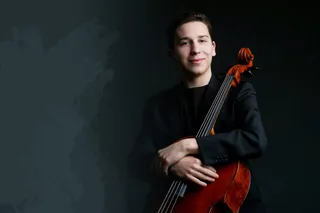
In the 1984 film Amadeus, rival composer Antonio Salieri says of Mozart’s Gran Partita, “This was a music I'd never heard... it seemed to me that I was hearing the voice of God.” Symphony in C’s woodwinds will perform this rarely heard and extremely difficult piece. This concert also features the exciting young cellist Oliver Herbert.
Mozart:Marriage of Figaro Overture (Wendt/Block) for Woodwind Octet
Ibert: Cello Concerto
Oliver Herbert, cello
R. Strauss: Serenade in E-flat Major, Op. 7
Mozart: Serenade No. 10 in B-flat Major, K. 361 "Gran Partita"

Program Notes
Wolfgang Amadeus Mozart
Born: 27 January, 1756, Salzburg, Austria
Died: 5 December, 1791, Vienna, Austria
When he composed operas, Mozart typically waited until the rest of the opera was complete to write the overture. In some of his operas, the overture gives a preview of themes that will return later in the opera, but that is not the case with Mozart’s Overture to The Marriage of Figaro. The material in this overture is completely new, but nonetheless manages to fully capture the essence of this opera and sets the stage for the story that will unfold.
Written in 1786, The Marriage of Figaro was the first of three collaborations between Mozart and the librettist Lorenzo da Ponte. The story for this opera is taken from the play Le Mariage de Figaro by Pierre Beaumarchais, which is a sequel to the playwright's Le Barbier de Seville (later turned into an opera by Rossini). In a tangle of love triangles and the complications of a class-based society, the characters of this opera emerge: Susanna, a maid to the Countess who is betrothed to fellow servant Figaro; the Count, a philandering scoundrel who plans to seduce Susanna; and Cherubino, the adolescent page who is infatuated with the Countess.
While this work is generally categorized as an “Opera buffa”, or comedy, there are moments when characters express sentiments so true that the audience cannot help but feel the tragedy of their situations. Mozart perfectly captures these emotional shifts, and even in the overture one senses the many twists and turns to come.
Richard Strauss
Born: 11 June, 1864, Munich, Germany
Died: 8 September, 1949, Garmisch-Partenkirchen, Germany
Strauss wrote his Serenade in Eb Major in 1881 when he was just seventeen years old. By the time he was eighteen, the work was published and had been premiered in Dresden. This was not his first major composition, as he had already completed many works for solo piano, several lieder, a substantial amount of chamber music, a few orchestral overtures, and some pieces for chorus. As the son of a famous french horn player, Franz Strauss, Richard benefited from exposure to the great masters of classical music from an early age. Franz Strauss was particularly fond of Mozart, Haydn and Beethoven (although not his later works) and forbade his son to listen to the “new” music of Wagner. Despite Franz’s efforts, Richard would later become enamored of the great musical force of Wagner, whose music would have a tremendous impact on Strauss’s own compositions. However, this early work respectfully pays tribute to Richard’s upbringing in the classical style. Similar to many of Mozart’s serenades, this work is in sonata form. During the exposition, the two main themes (one major and the other minor) are presented in their complete form before the development. As the music returns to the recapitulation and restatement of the themes, Strauss gives the first melody to his father’s instrument, the horn, in a tender and poignant moment. This thoughtful and well- composed work would be considered a gem in a mature composer’s portfolio but is even more impressive given Strauss’s young age.
Jacques Ibert
Born: 15 August, 1890, Paris, France
Died: 5 February, 1962, Paris, France
The musical output of French composer Jacques Ibert covers a wide range of genres, including seven operas, five ballets, music for solo piano, a variety of pieces for chamber ensembles, choral works, incidental music for the stage and screen, and two well-known orchestral works, Divertissement and Escales. Ibert’s musical style was also quite varied and reflective of the diversity of musical genres of his day. At times, his writing is reminiscent of the great impressionist masters, Debussy and Ravel, and within the same piece he may suddenly shift to a more lighthearted approach, similar to his compatriot, Francis Poulenc. This diversity of styles is very present in his Concerto for Cello, which was composed in 1925. After a gentle pastoral introduced by the winds, a sudden outburst from the horns shocks the listener and transitions into a boisterous dialogue between the cello and orchestra. In the second movement, a Romance, the listener is struck by the irony of the title for this quirky and sometimes dark movement. Cadenzas throughout the second and third movements give the soloist a chance to take the spotlight. Ibert entitled the third movement “Gigue”, which was a quick and lively dance from the Renaissance and Baroque periods. This is a fitting title for a movement so full of vigor and life.
Two elements set this piece apart from most other cello concertos. First, it is written for cello and ten wind instruments instead of the typical full orchestra. Second, while the cello is featured in this work it is more of an equal partner with the other instruments in the ensemble than the dominant soloist of most concertos. Rather than detract from this work, these elements highlight Ibert’s maturity and skill as a composer who could adapt well-known genres to his own personal style.
Wolfgang Amadeus Mozart
Born: 27 January, 1756, Salzburg, Austria
Died: 5 December, 1791, Vienna, Austria
“On the page it looked nothing...Just a pulse – bassoons and basset-horns – like a rusty squeezebox. Then suddenly – high above it – an oboe, a single note, hanging there unwavering, till a clarinet took over and sweetened it into a phrase of such delight!”
In these famous lines from Peter Shaffer’s play Amadeus, Mozart’s contemporary and rival composer Salieri is describing the Adagio from his Serenade No. 10 in Bb Major. Although this is only an imagined response from someone hearing this serenade for the first time, we have plenty of documents citing equally enthusiastic responses to this masterpiece. Johann Friedrich Schink, who heard the first public performance of a section of the work, wrote: “I heard music for wind instruments today by Herr Mozart, in four movements, glorious and sublime. It consisted of 13 instruments...Oh what an effect it made – glorious and grand, excellent and sublime”.
This eight-movement work is indeed glorious and sublime. Mozart seems to have taken unusual care in writing this Serenade, perhaps composing it intermittently for a year or two. Experts have been unable to give a precise date of completion but most agree that it was written between 1780 and 1782. The title “Gran Partita” was not given by Mozart but has become the common way of referencing this work.
Serenades of Mozart’s time were still being commissioned by wealthy patrons as background music for their parties. However, a small number, including this one, were beginning to make appearances on concert programs. Mozart’s choice of instruments is an unusual one--pairs of oboes, clarinets, basset horns and bassoons, along with four french horns and a double bass. The basset horn, a deeper and richer type of clarinet, was a particular favorite of Mozart's: he used this instrument in dozens of chamber works, several operas, his requiem, and Maurerische Trauermusik. Having so many instruments in the low ranges gives a beautiful depth and richness to this work and Mozart’s masterful writing prevents the more delicate instruments from being overrun by the four horns.
Mozart’s genius shines brightly in this serenade, displaying the inner drama of the work which keeps the listener engaged throughout. With his innate understanding of instrumentation he creates unusual blends through unconventional instrument choices, and phrase after phrase demonstrates Mozart’s trademark ability to compose simple, yet exquisitely shaped melodies.
Symphony in C program notes are written by Megan Carroll.